

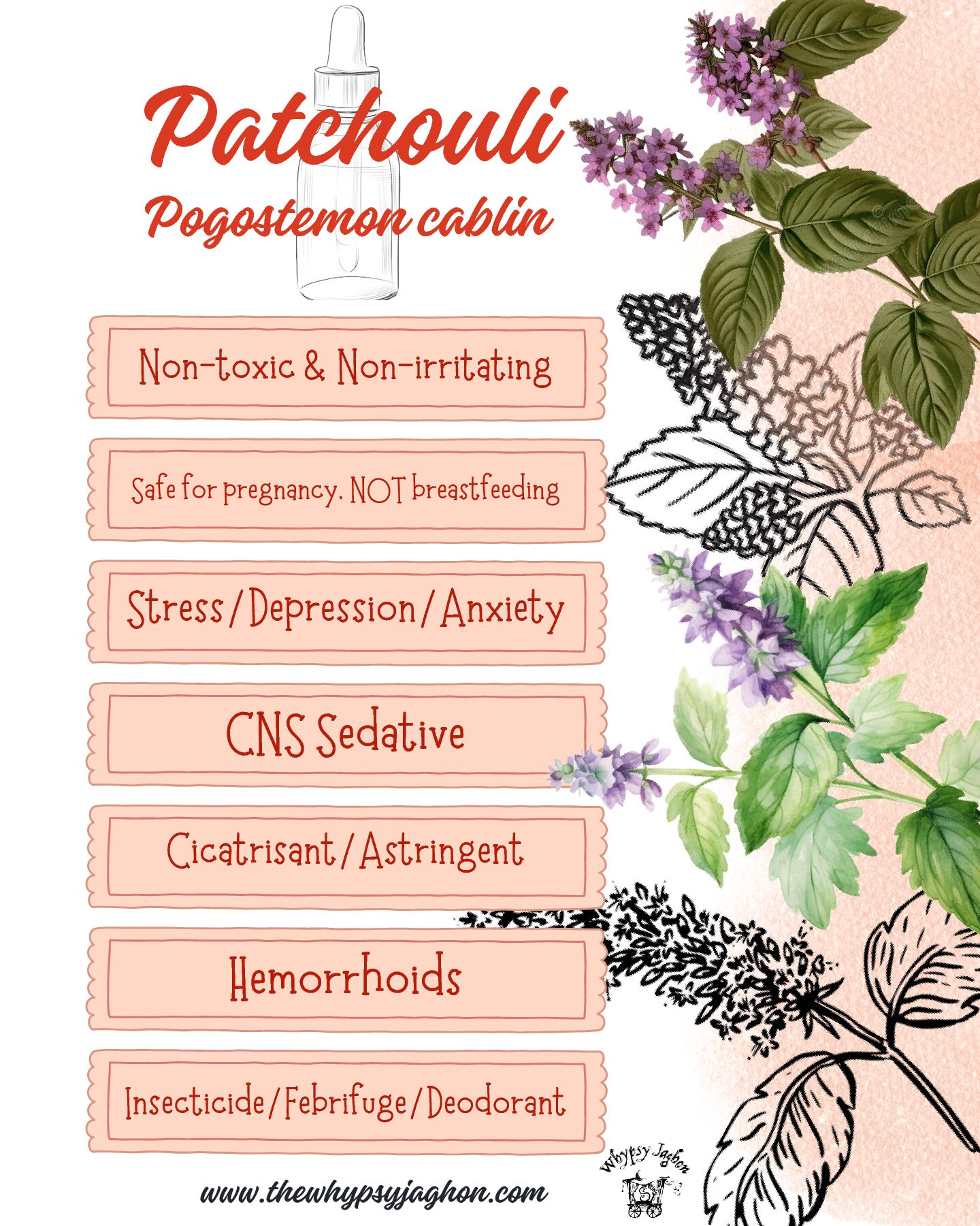
The Power of Patchouli: Skin, Cellulite & Beyond
Patchouli (Pogostemon cablin), a proud member of the Lamiaceae (mint) family, thrives in Indonesia, where farmers produce the highest quality essential oil. In contrast, patchouli oil from China often lacks potency—frequently adulterated with balsam oils. Since purity drives patchouli’s power, I always verify the GC/MS reports and confirm the country of origin. British Malaya once led the way in distillation until the Seychelles took over after World War II, though their oil often lacks the same quality.
Patchouli Is My Ride-or-Die
Patchouli holds sacred space in my apothecary—and my heart. I could bathe in it daily. Honestly, I’ve even said I’d like to be cremated with patchouli leaves. This oil’s earthy scent often gets misunderstood. People sometimes link it with death only because it historically masked the smell of decomposition. In Victorian India, folks tucked dried patchouli leaves into cashmere garments to ward off moths.
Distillation, History & Healing
Producers harvest the young leaves, dry and ferment them, then extract the essential oil through steam distillation. For centuries, people have used patchouli as an antidote to insect and snake bites—and its healing doesn’t stop there.
Patchouli’s cicatrisant properties (tissue-regenerating and scar-reducing) encourage new skin cell growth. I especially love it for skin recovering from rapid weight loss or damage. It helps tone and tighten while deeply nourishing.
Support for Cellulite, Veins & Water Retention
As a natural diuretic, patchouli eases water retention, bloating, and cellulite. I blend it into my Cellulite Scrub and You’re So Vein lotion bar, as well as other formulas focused on circulation and lymphatic flow.
Antifungal, Antiseptic & Bug-Repelling Benefits
Studies show patchouli inhibits 12 strains of fungi, making it a powerhouse for antifungal formulas. It also repels bugs—gently. Because it’s kind to skin, I love using it to balance the intensity of oils like tea tree or eucalyptus. Every time I build a bug spray or antifungal blend, I pair strong essential oils with mild, skin-loving ones to maintain balance.
Safety & Contraindications
Patchouli generally agrees with most people, but its antiplatelet activity means it isn’t ideal during breastfeeding or alongside blood-thinning medications. Human studies show little to no irritation, even at higher concentrations. For context, a 20% dilution used in animal testing equals 100 drops per 1 oz of carrier oil—far more than I’d ever use. I stick with 1–5% dilutions. Reactions mostly occurred in those with fragrance sensitivities.
Back to Basics with Patchouli
Grounding. Versatile. Therapeutic. Patchouli continues to earn its place in my everyday toolkit. Straight from the earth, this herb brings ancient wisdom and modern-day healing to every blend I make.