

The Power of Black Pepper: Circulation, Digestion & Pain Relief
Black Pepper (Piper nigrum) delivers a dry, fresh, warm, and spicy aroma—far from anything sweet. I especially love pairing it with grapefruit or ylang ylang for an invigorating blend. This vine-like shrub thrives in the shade, and producers distill the essential oil from black peppercorns only—not white. Although cultivated widely across the East, the highest quality oils come from Singapore, India, and Malaysia.
A Spice of Ancient Prestige
Healers in India used black pepper over 4,000 years ago, primarily for urinary and liver disorders, though it likely served against cholera and dysentery too. The spice became so revered that Romans used it as currency—paying taxes in pepper instead of coins. Greeks turned to it for fevers, while the Ottoman Turks taxed travelers who carried it. In the Middle Ages, black pepper dominated trade between India and Europe, triggering multiple naval wars between the Portuguese, French, and Dutch. The Portuguese controlled the black pepper monopoly until the 1800s!
Relief for Muscle Pain, Stiffness & Circulation
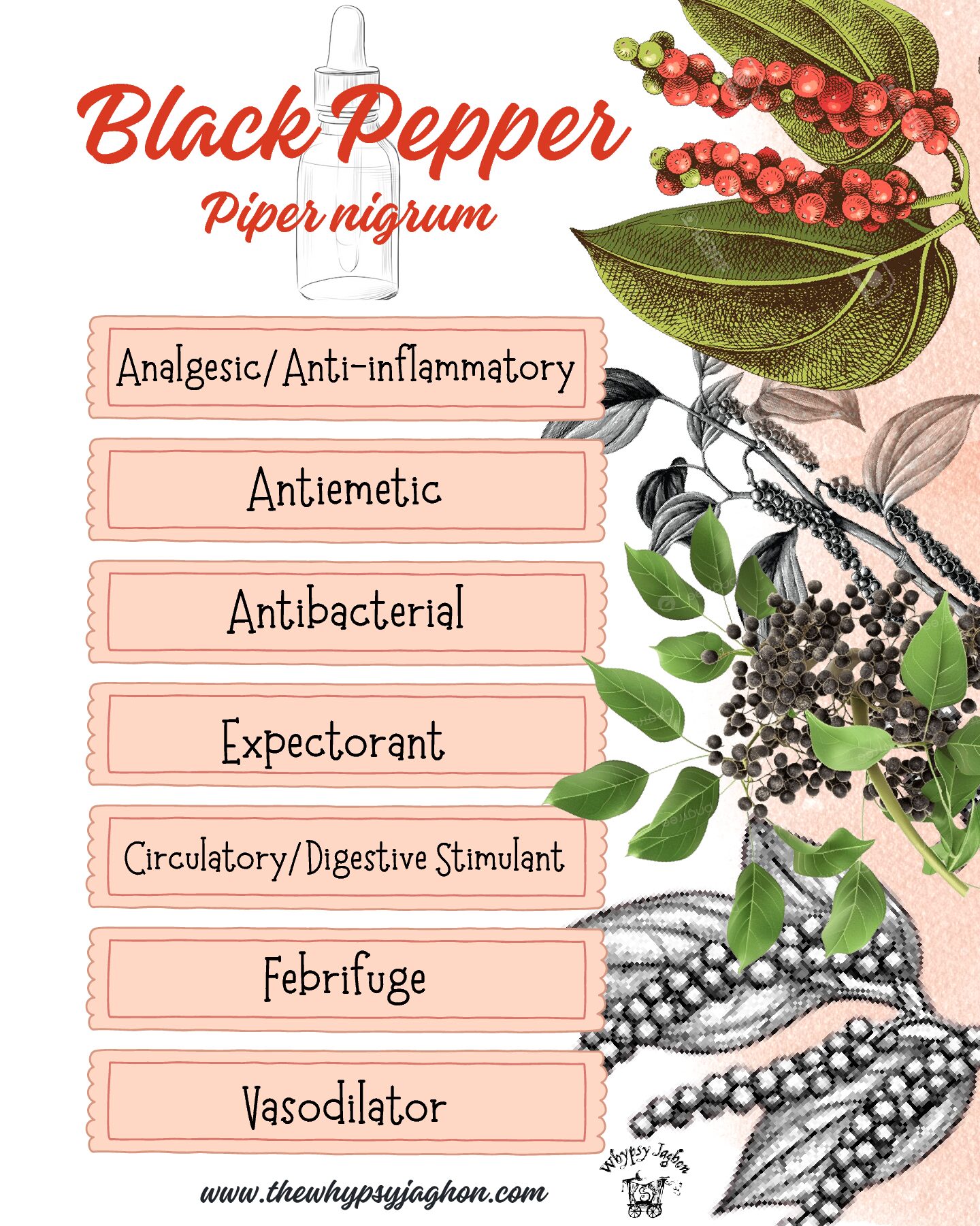
Black pepper warms and relieves pain in both skeletal and smooth muscles. By dilating local blood vessels, it supports blends for joint pain, stiffness, arthritis, and even limb paralysis. I love it for its vasodilating and rubefacient properties, which make it ideal for circulatory support and especially useful in my varicose vein lotion bar.
This oil also works wonders for digestion. It tones the stomach, stimulates appetite, and increases saliva. It helps expel gas, ease nausea and vomiting, and support peristalsis—making it an excellent ally for restoring colon tone and addressing sluggish bowels.
DIY Massage Blend for Muscle Pain & Stiffness
Here’s one of my favorite blends for muscular tension:
- 4 drops Black Pepper
- 4 drops Eucalyptus (E. globulus)
- 2 drops Rosemary (ct. camphor)
- 4 drops Lavender (L. angustifolia)
Add to 1 oz (30 ml) jojoba oil. Massage onto sore areas several times a day.
Safety & Skin Considerations
Some label black pepper as a skin irritant, but this often stems from oxidized oil, not fresh oil. Like many essential oils, it can have both antioxidant and pro-oxidant effects, depending on the context. A study showed undiluted black pepper oil mildly irritated rabbits, but not mice or pigs—and that’s without dilution. To reduce the chance of irritation, I always recommend using an antioxidant, especially since limonene content ranges from 16–24%. Despite its heat, black pepper remains non-toxic when properly handled.
A Circulatory & Chemoprotective Ally
Beyond its pain and digestive benefits, black pepper oil also shows chemopreventive activity. One study found it dose-dependently inhibited aflatoxin B1–induced DNA adducts and showed moderate protective effects against human mouth epidermal carcinoma cells and mouse leukemia cells (Tisserand, p.385).
From Ancient Spice to Modern Must-Have
Whether you’re boosting circulation, addressing digestive woes, or easing muscular discomfort, black pepper oil stands tall in the apothecary. With its rich history and powerful modern applications, it’s a spicy essential that earns its place in any herbalist’s toolkit.