

Antioxidants vs. Preservatives
Why the Difference Matters for Your Natural Products
The Confusion About “Natural Preservatives”
I often see claims about “all-natural preservatives” in homemade remedies so the battle of Antioxidants vs. Preservatives begins. Here’s the truth—without formal training in cosmetic chemistry, I would not trust those claims.
Adding ingredients like aloe vera gel? That’s not preservation—that’s shortening the shelf life. Aloe is water-based, and water invites microbial growth. Once you add it, the countdown begins for your product to spoil.
That’s why I never claim to use preservatives in my products. Instead, I use natural antioxidants—and there’s a big difference.
What Are Antioxidants?
Antioxidants prevent or slow oxidation. Oxidation happens when oxygen interacts with organic material, creating free radicals—unstable molecules missing an electron.
Your body faces anywhere from 75,000 to 100,000 free radical “hits” every day (Bach & Stengler, 2004). These free radicals damage cells, speed up aging, and contribute to disease. They also degrade oils, butters, and herbal products.
Just like fresh meat spoils quickly without refrigeration, natural oils and butters go rancid faster without antioxidants.
Antioxidants Are Not Preservatives
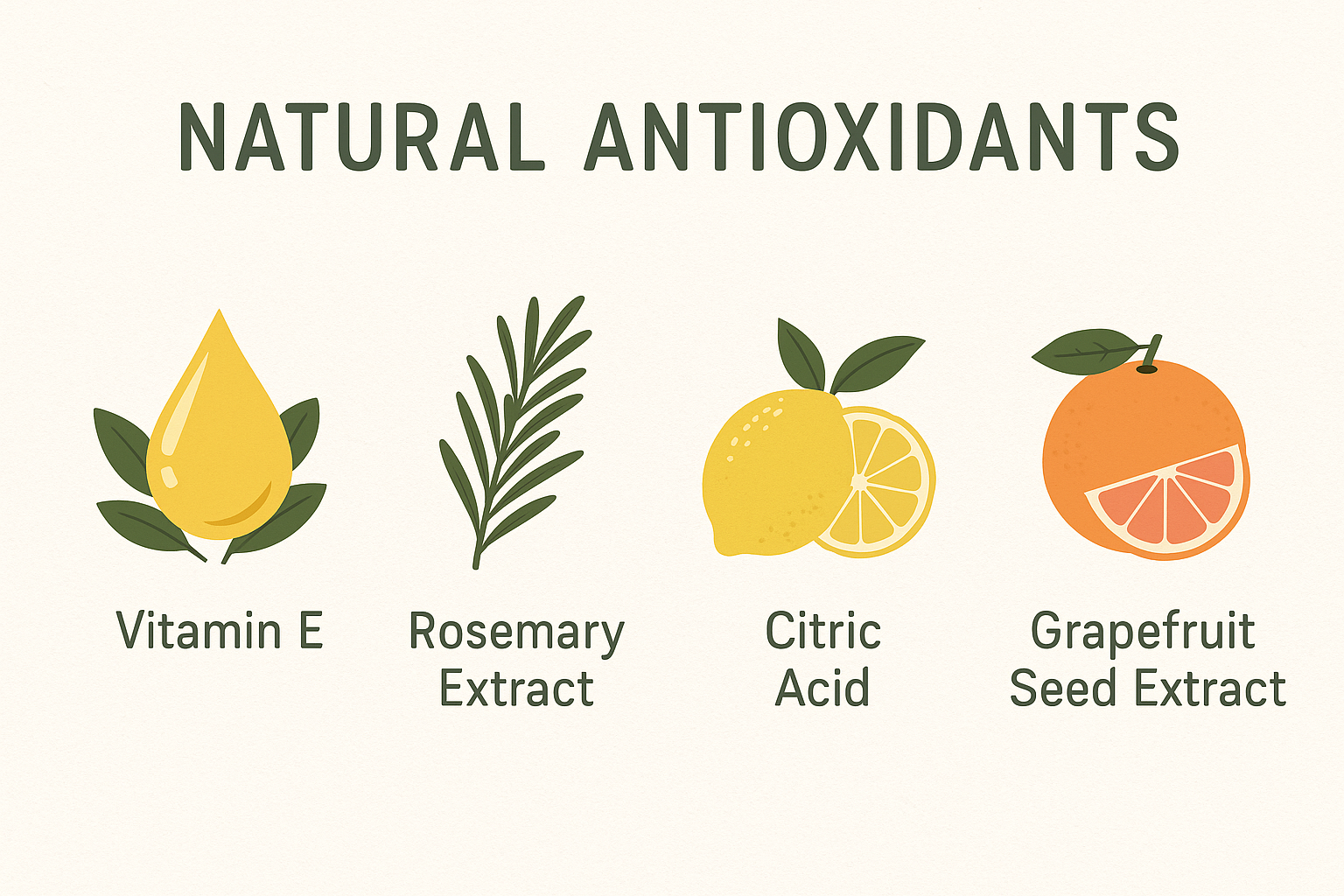
Popular natural antioxidants include:
- Vitamin E (Tocopherol) – Protects oils from rancidity and supports skin repair.
- Rosemary Extract – Slows oxidation in fats and oils.
- Citric Acid – Adjusts pH and helps stabilize formulas.
- Grapefruit Seed Extract – May offer some antimicrobial benefit, but primarily slows oxidation.
Important: Antioxidants slow rancidity. They do not prevent bacterial, yeast, or mold growth.
A 2020 International Journal of Cosmetic Science review confirmed that true preservation requires broad-spectrum antimicrobial protection—something antioxidants cannot provide.
Why Preservatives Require Chemistry Knowledge
Preservatives must stop microbial growth. This means understanding pH ranges, water activity, and emulsions. Once water enters a formula—whether from aloe vera, hydrosols, or even accidental contamination—microorganisms can thrive.
In aromatherapy, oxygen is the enemy. More headspace in your container = more oxidation. I always store products in full, airtight containers to reduce oxygen exposure.
Why Essential Oils Aren’t Enough
Some essential oils have antimicrobial properties. Tea tree and thyme are examples. But to preserve a product, you’d need unsafe concentrations for skin use. Studies (e.g., Food Microbiology, 2018) show essential oils can slow microbial growth, but they do not replace a professionally formulated preservative system.
How I Extend Shelf Life Naturally
- Use anhydrous formulas (no water = less microbial growth).
- Work with true butters and stable oils like jojoba.
- Add vitamin E to slow rancidity and nourish skin.
- Keep water out of jars—especially scrubs and balms.
Rule of thumb:
- Antioxidants = fight free radicals & slow rancidity.
- Preservatives = prevent bacteria, mold, and yeast.
The Takeaway
If a product contains water, it needs a preservative—natural or not—formulated by someone trained in cosmetic chemistry. Antioxidants are amazing for protecting oils and skin, but they won’t make your product safe from microbial growth.
The more you know. GI Joe.