

Ragweed Remedy: History, Folklore, and Herbal Uses
Ragweed Season in Texas
In North Central Texas, ragweed season typically runs from mid-August through November, or until the first frost. In warmer years, it may stretch all the way into January. Ragweed thrives during dry, hot summers, which means Texans can expect plenty of pollen in the air.
A single ragweed plant can produce up to 1 billion pollen grains, and across the United States, ragweed contributes nearly 100 million tons of pollen each year. No wonder it’s often the culprit behind sneezing fits and itchy eyes.
Meet the Ragweed Family
The most common species in Texas is Giant Ragweed (Ambrosia trifida), though there are between 17 and 25 recognized ragweed species in North America. The genus name Ambrosia means “food of the gods,” which feels ironic given ragweed’s reputation as a top allergen. But like many plants named centuries ago in Europe, ragweed’s medicinal and practical uses were not well understood at the time.
Native American Uses and Folk Remedies
Interestingly, Native Americans were historically not allergic to ragweed. Instead, they found many uses for it:
- Seeds were eaten as food.
- Leaves were prepared as medicine.
- Stems were used as cordage for rope.
Traditionally, ragweed was considered stimulating, astringent, and antiseptic. Some tribes brewed teas or used poultices from the leaves to treat wounds, fevers, and insect bites.
Ragweed as Its Own Cure
Here’s where things get fascinating: ragweed itself has been used as a remedy for the very allergies it causes. Herbalists often prepare ragweed in tincture form to help desensitize those suffering from hay fever. This works somewhat like a natural inoculation.
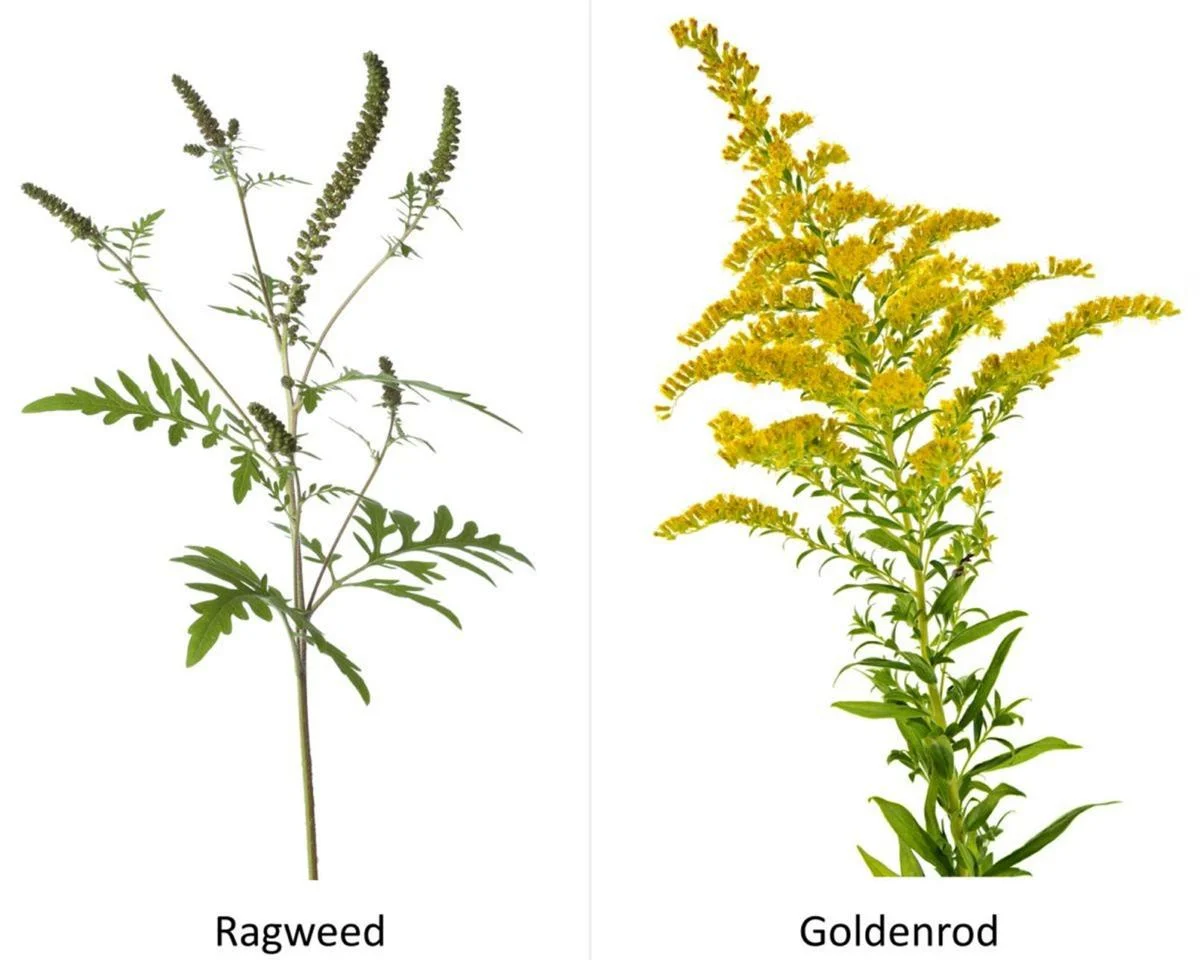
Goldenrod (Solidago spp.) is another plant sometimes used for seasonal allergies. However, folklore has unfairly placed the blame for allergies on goldenrod. The confusion is so widespread that even Disney reinforced it—remember the scene in Snow White and the Seven Dwarfs where Sneezy blames his sneezing on goldenrod? In reality, it was ragweed all along, not goldenrod’s bright golden flowers.
Cross-Reactivity and Cautions
It’s important to note that ragweed belongs to the Asteraceae family, which also includes chamomile and mugwort. For some, this causes cross-reactivity, where the immune system confuses antigens between related plants. That’s why a few people allergic to ragweed cannot tolerate chamomile teas or products containing goldenrod or mugwort.
Modern Herbal Insight
Beyond allergy remedies, research suggests ragweed’s leaves contain compounds with antimicrobial and anti-inflammatory properties. While ragweed remains a villain in allergy season, it also holds promise as a medicinal ally when used thoughtfully.
Ragweed might make you sneeze, but it has a long history as food, fiber, and even medicine. With the right preparation, this “villain” of allergy season could also be one of nature’s misunderstood healers.