

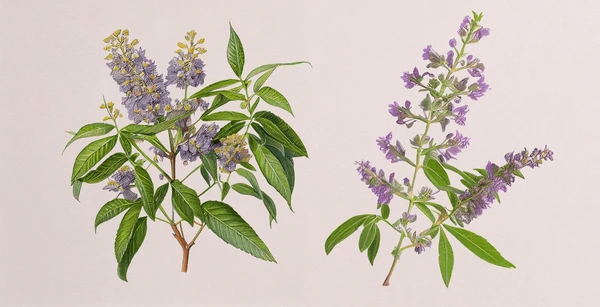
Vivacious Vitex
The Queen of Hormonal Harmony
Vitex agnus-castus
Common names: Chaste Tree, Texas Lilac, Monk’s Pepper
A Backyard Blessing
The first time I truly learned about Vitex (Vitex agnus-castus), I was researching natural fertility support for a friend. Little did I know, we already had one growing in our own flower garden—an heirloom from the previous owners who had tried (and thankfully failed) to cut it down.
Vitex is a resilient beauty. Its tall purple flower spikes bloom in the Texas heat, attracting bees and butterflies while quietly working powerful magic beneath the surface. If you live in the South, especially Texas, there’s a good chance you have one too.
A Legacy of Women’s Wisdom
Vitex has been used for centuries to support reproductive health. Ancient Greek physician Hippocrates recommended the plant for injuries, spleen swelling, and aiding in childbirth. He wrote that soaking the leaves in wine helped stop uterine bleeding and expel the afterbirth.
Dioscorides, another Greek medical pioneer, described the fruit as hot and astringent, helpful for wild animal bites and dropsy. It was also used in sitz baths for uterine conditions.
Over time, its reputation grew:
- Greek women wove Vitex into their beds during Demeter festivals to symbolize chastity.
- Monks used the berries, hence the name “Monk’s Pepper,” believing it helped maintain celibacy.
- In medieval Europe, novice monks would walk on the leaves as a rite of passage into spiritual life.
While tradition suggests it could suppress libido (an anaphrodisiac), modern science does not support that claim.
What Science Shows
Today, Vitex agnus-castus is widely respected for its effect on female hormone balance—specifically progesterone and estrogen. Clinical studies support its ability to relieve symptoms of:
- Premenstrual syndrome (PMS)
- Breast tenderness
- Mood swings
- Sweet cravings
- Anxiety
- Early menopause symptoms
- Irregular menstruation
- Some forms of infertility
According to research in Phytomedicine, Vitex may influence the dopaminergic system, which helps regulate prolactin—a hormone that affects both mood and menstrual regularity.
How to Use Vitex
The part most often used is the dried berry. A tincture is commonly made and taken daily on an empty stomach—15 drops in water before breakfast. For best results, Vitex should be taken daily for 8–12 weeks before reducing to a few times a week for up to 6 months.
Active constituents include:
- Iridoid glycosides
- Flavonoids
- Essential oils
- Diterpenes
Safety & Cautions
Avoid Vitex if pregnant, breastfeeding (unless guided by a practitioner), or taking hormone replacement therapy (HRT) or oral contraceptives, as it may interfere. Always consult your healthcare provider first.
Vitex: The Hormone Whisperer
With its deep roots in both historical healing and modern science, Vitex remains a cherished herbal ally for hormonal support. Whether you’re navigating PMS, cycle irregularity, or early menopause, this resilient tree may offer gentle yet powerful relief.